Particularly annoying are the ads for pharmaceuticals that claim their drugs will cure you and then you hear numerous disclaimers of how the side effects of their drugs will no doubt kill you first. The disclaimers go on and on and on as if they’re trying to talk me out of using their products. It would be laughable if it wasn’t so terrifying.

Those pharmaceutical commercials are probably written by attorneys that advertise their prowess in getting bigger lawsuit settlements than their incompetent competitors.
The lawsuits are undoubtedly filed against the insurance companies who advertise that their helpful service and generous coverage is superior to that of their ruthless, blood-sucking competition. And so on.

Traditional broadcast networks have to pay their bills somehow, I suppose, and selling advertising time is the easiest and the most profitable method, depending on a program’s popularity. Companies get the word out about their products. Amassing enough “sponsors” allows networks to air their programming for free to the TV viewing public. A win-win scenario.
Ha! Win-win for them, maybe. Not necessarily for us. We the viewers know those programs aren’t free, don’t we? There is definitely a price for us to pay, a heavy price. We have to sit through at least a dozen multi-ad commercial interruptions per program.
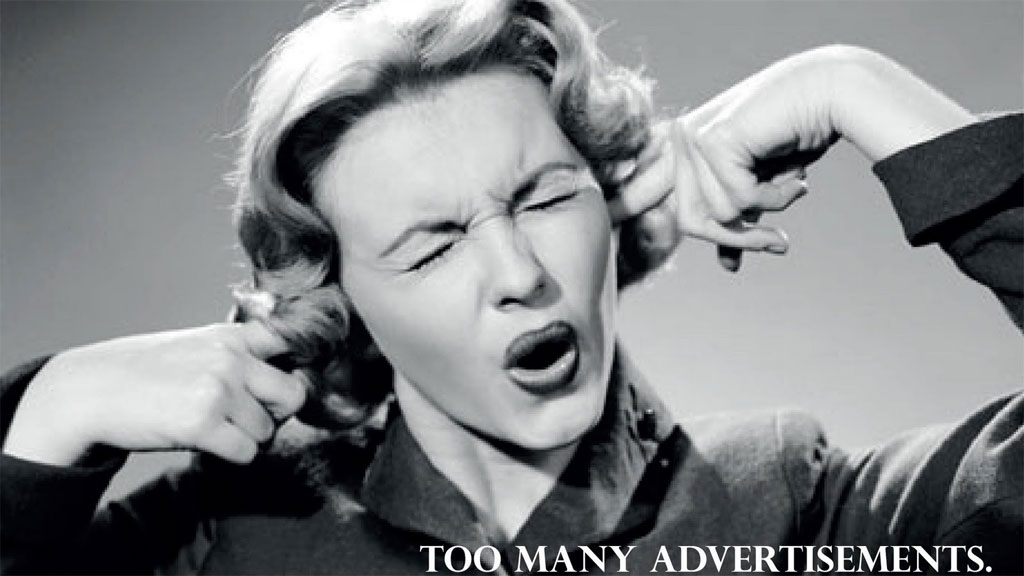
The number of ads during hour and half-hour long shows are aggravating. The huge number of commercials during movie broadcasts is unendurable. The screening pattern that I’ve noticed is about fifteen to twenty minutes to the first multi-ad commercial interruption—that gets you hooked on watching—and from then on there is a multi-ad commercial interruption following every five minutes of motion picture. They even have one between the final scene and the movie end credits. Ridiculous.
Having once worked in an advertising agency, I’m not a total commercial curmudgeon. There are and have been some excellent commercials out there. The best of the best manage to touch the emotions or amuse and entertain. Those can actually qualify as guilty pleasures.
Years ago, Kodak produced a number of very warm, touching photo commercials. Budweiser with its magnificent Clydesdales also tugged on the heartstrings with its ads. Cheerios had a commercial that was both touching and funny. A mom tells her little daughter that Cheerios are healthy for you and can protect again heart attacks. In the next scene, the dad wakes up from a nap on the couch to find himself covered in Cheerios. Awww.
The Kia ad with Melissa McCarthy trying to save every endangered species on the planet was a hoot. She became an endangered specie herself the harder she tried. Hilarious.
 It’s Tuesday, November 4, 2014. Mid-Term Election Day. Thank God.
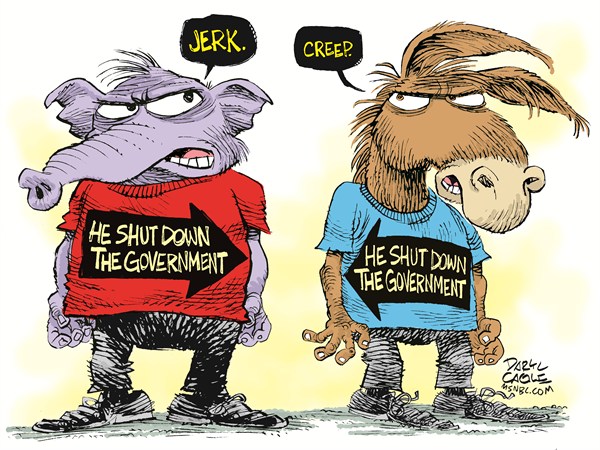
Today is the last day Macho Guy and I will have to put up with negative political ads on TV and incessant political phone calls blaring canned political messages about their office-seeking political candidates who have nothing good to say about their incompetent, lying, thieving, grafting, corrupt and immoral political opponents. [And those were their good qualities, of course.]

I once worked in a New York advertising agency so I tend to view commercials with skepticism. Political ads make me feel downright paranoid. There is something very unsettling about being asked to vote for a person who was “packaged” by the same mindbenders who persuade us to buy toothpaste, mouthwash, and deodorant.
How are political candidates packaged? It may well be on an assembly line in a political candidate factory. [Look for the union label.]
First of all, there is the dress code. The male candidates you see in these ads—who ordinarily wouldn’t be caught dead out of their three-piece, pin-striped suits—are running around in rolled up shirt sleeves, tieless or with ties loosened and slightly askew. If they have suit jackets, they are hooked on the index finger of one hand and jauntily tossed over one shoulder. They will wear a hard hat at least once during the campaign. This is to convince us that they are down-to-earth, regular working stiffs like the rest of us.
Female candidates are coached to dress for success and must do their best to look and sound as “presidential” as possible no matter what office they run for. That usually means serious hair, understated makeup and jewelry (or other accessories), man-tailored suits (or pantsuits), and low-heeled pumps.
Both male and female candidates will be urged to acquire a tan for that healthy outdoor look and whitened teeth for a great photo op smile.
Required public behavior for candidates of both genders includes the following: smile broadly and avoid putting one’s foot in one’s mouth, shake hands firmly while avoiding comments on the CDC and infectious diseases, kiss babies while avoiding getting puked or peed on, attend religious services regularly while avoiding a stand on gay marriage, sample ethnic foods while avoiding a stand on immigration, tour factories while avoiding a stand on right to work laws and the minimum wage, and make lots of speeches during which they say little of actual substance and then promise their constituents the moon.
While any reference to sensitive issues must be excluded from their speeches, certain words and phrases must be included at all costs.
The key word in every campaign speech and political ad is the word fight. Packaged candidates are never presented as legislators, administrators, or even as hard workers. They are fighters. They do not sponsor or cosponsor legislation, nor do they work to pass legislation. They fight to pass legislation. They fight to lower our taxes, fight to clean up and protect the environment, fight to make our cities and neighborhoods safer, and fight to improve our schools. [If only.]
With all that fighting going on, is it any wonder government is called the political arena? So, do these fighters actually challenge the loyal opposition to step outside to settle the issue? Oh, please. Most of them look like wusses to me.
Another word heard frequently in these ads is tough. These fighters are tough on crime, tough on drug dealers, tough on polluters, tough on tax evaders, and tough on crooked politicians. If they are so tough on all of the above, why do we still have them?
These tough fighters also claim to be tested. Well, who conducted the tests and how do we know if the tough fighters passed? Has anyone ever been allowed to examine these tough fighters’ test grades? Ha. I didn’t think so.
In addition, these tough tested fighters all boast of being leaders. Every single one of them. If campaign ads were to be believed, there are no followers in politics, only leaders. It seems highly probable that some of those self-styled leaders are misleading us about being leaders and are thereby leading us down the proverbial garden path.
Which leads me to the two most misunderstood words in the vocabulary of the average candidate: honest and promise. These words do not mean the same thing to a political candidate as they do to you and to me.
We believe being honest means not lying, cheating, stealing, defrauding, reneging, abusing power, or taking unfair advantage. For a politician and his campaign manager, those are powerful tools used to achieve victory.
We think a promise means giving your word and keeping it. Not so to a political candidate. A candidate thinks it means giving his word, getting elected on the basis of whatever he promised, and then finding a politically expedient way out of keeping his word when it becomes necessary. Strangely enough, it usually becomes necessary. Imagine that.
The average political campaign could easily discourage people from voting. The TV ads are negative, vicious, aggravating, disgusting, and an insult to the intelligence. So much so, that when I go to the polls to vote, I mark my ballot with one hand and hold my nose with the other. If you have a weak stomach and a strong sense of smell, I highly recommend this technique.