 As a child growing up Italian-American, I witnessed a demonstration of the kind of persuasion that would eventually influence the architects of political correctness. If you find political correctness annoying now, you should have seen what it was like way back when. In its unvarnished infancy, this early form of political correctness was a demanding and ugly baby—so ugly, it would scare you spitless and you would give it anything it wanted. And I do mean anything. And quickly. Very quickly. Like yesterday, especially if you were fond of your kneecaps.
These days, political correctness is more political than correct, and it has everyone second-guessing everything he says before and after he opens his mouth despite the First Amendment’s protection of free speech. Anti-defamation groups are popping up everywhere like night crawlers after a rain. Modern-day practitioners of political correctness have perfected public whining to such a degree that it is now unofficially considered to be one of the performing arts.
Not so for the pioneering Italian-American practitioners of political correctness. They didn’t whine in public when they were displeased or offended by ethnic slurs or stereotyping, they wielded—bats, metal pipes, and grappling hooks. You name it; they wielded it. Let’s just say they were not whiny, wordy or terribly subtle about their methods of persuasion. Theirs was political correctness on steroids.
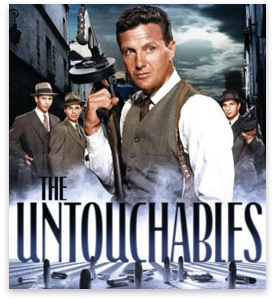
It was a half century ago that a group of Italian-Americans [longshoremen, mostly] took umbrage at a television show—The Untouchables—for publicly defaming Italian-Americans on a weekly basis. They claimed the show stereotyped them as the only criminal element in society. It stands to reason, however, that Italian-Americans would not have been pegged as society’s one and only criminal element had it not been for a certain anti-social subculture in that ethnic group. This subculture, referred to alternately as La Cosa Nostra [“Our Thing”], The Mafia, or The Mob, consistently failed to keep a low profile. Instead of taking care of business in private, they gunned down one another right out in the open in front of God and everybody. [Silencers might have helped some.]
The Italian-American League to Combat Defamation [Sure, let’s call it that.] insisted that The Untouchables’ sponsor drop the show, and it pressured the show’s production company [Desilu] to change mobster surnames from Italian to those of other nationalities. Additionally, they made demands for improving the depiction of Italian-Americans on the program. Not surprisingly, the League got its way in every way. [I often wonder if some among them made the sponsor and the producer offers they couldn’t refuse.]
My grandparents immigrated to The States from Italy—Sicily, to be exact. Because of my ancestry, people expected me to look like Sophia Loren, cook like Alfredo Di Lelio, sing like Renata Tebaldi, and break kneecaps like Lucky Luciano. They were disappointed on all counts.
They were also disappointed to learn that I was not really a Mafia Princess. No one in our family was ever involved in the Mafia. We were not connected, as they say. Nevertheless, the Mafia jokes persisted, and throughout the years those jokes grew very, very stale.
I wish I had a share of Apple stock for each time one of the intellectually bankrupt young men I dated referred to me as The Mafia Princess. Sadly, I only profited once from that erroneous designation. The circumstances under which it paid dividends were priceless, producing a memorable occurrence where the stars and planets were perfectly aligned.
Shortly after we married, Macho Guy and I moved to the South where he completed his tour of duty in the Army and I taught a sixth grade class in a local elementary school. One noteworthy afternoon, I came home at the end of the school day to be greeted by a sad-faced, sorrowful Macho Guy.
ME: Uh-Oh. What’s wrong?
MACHO GUY: I’m sorry to have to tell you this, Honey. There was a death in your family yesterday.
ME: [Dropping my briefcase] Oh, no! Who died?
MACHO GUY: Your favorite uncle. [He handed me the newspaper he was holding.]
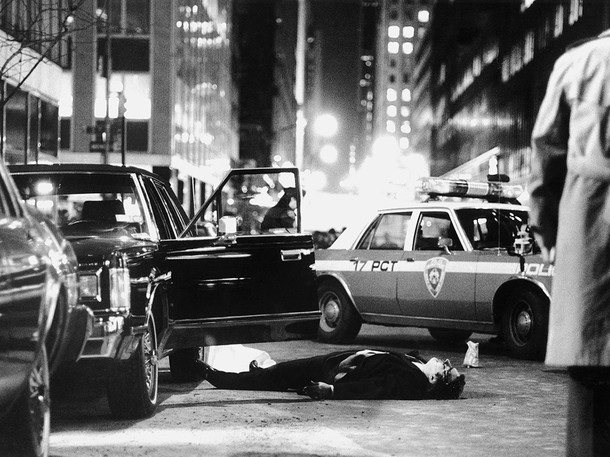
The front-page headline read: Mobster executed gangland style. I’m not sure, but I believe I picked up my briefcase and hit him with it. Hard. Really hard. My favorite uncle, indeed.
I was still annoyed with Macho Guy for suckering me with his phony sympathy act when I arrived at school the following day. I told my team-teaching partner Carol about his tasteless prank. I had the newspaper with me and showed it to her. She sympathized, gave me a hug, and assured me that Macho Guy would grow up eventually. Her husband did. We had a good laugh about that, and about men in general, and I tossed the newspaper with its offensive headline into my wastebasket where I felt it belonged.
That spring, the school’s principal Mr. K__ treated Carol and me with exceptional deference. He stopped complaining that our portable classroom was too noisy or that our skirts were too short. He asked—and took—our advice on school matters. Mr. K__ also gave us high marks on our performance evaluations. It seemed Carol and I could do no wrong. We were the envy of the school’s faculty.
Finally, at the PTA’s end of school year picnic for the faculty, Carol owned up to being the one responsible for our special treatment.
ME: You were? How?
CAROL: Remember that day when you were so aggravated with your hubby’s joke about your mobster uncle’s death?
ME: Oh, please. Don’t remind me.
CAROL: [grinning] Afraid I have to. That newspaper article got me thinking about how gullible Mr. K__ is. He was a jock back in high school, and he really is dumber than a box of rocks, bless his heart.
ME: So . . .what does that have to do with anything?
CAROL: [grinning broader] Well, because he’s the way he is, I went and did something I probably shouldn’t have.
ME: [with eyebrow arched] Car-rol, what did you do?
CAROL: [leaning forward in conspiratorial fashion] I fished the newspaper out of your wastebasket and took it to show Mr. K__. I told him you were feeling upset that day because there was this horrible death in your family.
ME: Oh, my God. You didn’t!
CAROL: [starting to giggle] I sure did. I said you came to work to take your mind off what happened, and that he shouldn’t bring it up because it might upset you. Then I handed him the paper and pointed to the headline. I swear to you on a stack of Bibles, he turned chalk white, and you should have seen the look on his face when I said, “It’s so tragic. He was her favorite uncle.”
12 Responses to “A “Mafia Princess” Tells All”
Sorry, the comment form is closed at this time.
Oh, Lana. Thanks for the laugh! What a great story, and blog. 🙂
I’m glad you enjoyed it. Sometimes in life you have to yield to the absurd and just laugh about it. 🙂
Oh, I love it. My dad also hated that program and refused to let us learn Italian because he didn’t want us associated with that element. As a first generation American-Italian, I think he suffered a lot of prejudice in his youth. Even as a successful businessman, he was very sensitive to his heritage.
My family actually watched The Untouchables for fun. My dad didn’t take it seriously. He would entertain us by making fun of the dialogue and the actors’ phoney-sounding Sicilian accents. [The Sicilian dialect is noticeably different from Italian.] It was hilarious.
I’m sure you forgave Carol, eventually. Didn’t you? Hilarious! Although I do sympathize with the guilt by association stigma many Italians suffered. It’s great that we celebrate diversity in this country, until the PC police intrudes to let us know we’re doing it ‘wrong’.
Oh, I definitely forgave Carol. The whole gambit was too funny not to forgive her. 🙂 What made it so hilarious was that Carol was the type who never made waves. She was the last person I would have expected to have the sand to pull a prank like that, bless her heart.
Sounds like you have a great friend in Carol! I wish my family ancestry was that interesting. We were bland… everyone in our town was German, British or Welsh. My family worked and ran the local quarry business. Literally, our town was known as the Sandstone Capital of the World.
No one will ever call my crazy family bland–that’s a given. I’m not sure if it’s a blessing or a curse. It could be both. 😉
HISTORY OF ALFREDO DI LELIO CREATOR IN 1908 OF “FETTUCCINE ALL’ALFREDO” (“FETTUCCINE ALFREDO”), NOW SERVED BY HIS NEPHEW INES DI LELIO, AT THE RESTAURANT “IL VERO ALFREDO” – “ALFREDO DI ROMA” IN ROME, PIAZZA AUGUSTO IMPERATORE 30
With reference of your article (for which I thank you), I have the pleasure to tell you the history of my grandfather Alfredo Di Lelio, who is the creator of “Fettuccine all’Alfredo” (“Fettuccine Alfredo”) in 1908 in the “trattoria” run by his mother Angelina in Rome, Piazza Rosa (Piazza disappeared in 1910 following the construction of the Galleria Colonna / Sordi). This “trattoria” of Piazza Rosa has become the “birthplace of fettuccine all’Alfredo”.
More specifically, as is well known to many people who love the “fettuccine all’Alfredo”, this famous dish in the world was invented by Alfredo Di Lelio concerned about the lack of appetite of his wife Ines, who was pregnant with my father Armando (born February 26, 1908).
Alfredo di Lelio opened his restaurant “Alfredo” in 1914 in Rome and in 1943, during the war, he sold the restaurant to others outside his family.
In 1950 Alfredo Di Lelio decided to reopen with his son Armando his restaurant in Piazza Augusto Imperatore n.30 “Il Vero Alfredo” (“Alfredo di Roma”), whose fame in the world has been strengthened by his nephew Alfredo and that now managed by me, with the famous “gold cutlery” (fork and spoon gold) donated in 1927 by two well-known American actors Mary Pickford and Douglas Fairbanks (in gratitude for the hospitality).
See also the website of “Il Vero Alfredo”.(with news also about franchising).
I must clarify that other restaurants “Alfredo” in Rome do not belong to the family tradition of “Il Vero Alfredo – Alfredo di Roma”.
I inform you that the restaurant “Il Vero Alfredo –Alfredo di Roma” is in the registry of “Historic Shops of Excellence” of the City of Rome Capitale.
Best regards Ines Di Lelio
IN ITALIANO
STORIA DI ALFREDO DI LELIO, CREATORE DELLE “FETTUCCINE ALL’ALFREDO” (“FETTUCCINE ALFREDO”), E DELLA SUA TRADIZIONE FAMILIARE PRESSO IL RISTORANTE “IL VERO ALFREDO” (“ALFREDO DI ROMA”) IN PIAZZA AUGUSTO IMPERATORE A ROMA
Con riferimento al Vostro articolo ho il piacere di raccontarVi la storia di mio nonno Alfredo Di Lelio, inventore delle note “fettuccine all’Alfredo” (“Fettuccine Alfredo”).
Alfredo Di Lelio, nato nel settembre del 1883 a Roma in Vicolo di Santa Maria in Trastevere, cominciò a lavorare fin da ragazzo nella piccola trattoria aperta da sua madre Angelina in Piazza Rosa, un piccolo slargo (scomparso intorno al 1910) che esisteva prima della costruzione della Galleria Colonna (ora Galleria Sordi).
Il 1908 fu un anno indimenticabile per Alfredo Di Lelio: nacque, infatti, suo figlio Armando e videro contemporaneamente la luce in tale trattoria di Piazza Rosa le sue “fettuccine”, divenute poi famose in tutto il mondo. Questa trattoria è “the birthplace of fettuccine all’Alfredo”.
Alfredo Di Lelio inventò le sue “fettuccine” per dare un ricostituente naturale, a base di burro e parmigiano, a sua moglie (e mia nonna) Ines, prostrata in seguito al parto del suo primogenito (mio padre Armando). Il piatto delle “fettuccine” fu un successo familiare prima ancora di diventare il piatto che rese noto e popolare Alfredo Di Lelio, personaggio con “i baffi all’Umberto” ed i calli alle mani a forza di mischiare le sue “fettuccine” davanti ai clienti sempre più numerosi.
Nel 1914, a seguito della chiusura di detta trattoria per la scomparsa di Piazza Rosa dovuta alla costruzione della Galleria Colonna, Alfredo Di Lelio decise di trasferirsi in un locale in una via del centro di Roma, ove aprì il suo primo ristorante che gestì fino al 1943, per poi cedere l’attività a terzi estranei alla sua famiglia.
Ma l’assenza dalla scena gastronomica di Alfredo Di Lelio fu del tutto transitoria. Infatti nel 1950 riprese il controllo della sua tradizione familiare ed aprì, insieme al figlio Armando, il ristorante “Il Vero Alfredo” (noto all’estero anche come “Alfredo di Roma”) in Piazza Augusto Imperatore n.30 (cfr. http://www.ilveroalfredo.it).
Con l’avvio del nuovo ristorante Alfredo Di Lelio ottenne un forte successo di pubblico e di clienti negli anni della “dolce vita”. Successo, che, tuttora, richiama nel ristorante un flusso continuo di turisti da ogni parte del mondo per assaggiare le famose “fettuccine all’Alfredo” al doppio burro da me servite, con l’impegno di continuare nel tempo la tradizione familiare dei miei cari maestri, nonno Alfredo, mio padre Armando e mio fratello Alfredo. In particolare le fettuccine sono servite ai clienti con 2 “posate d’oro”: una forchetta ed un cucchiaio d’oro regalati nel 1927 ad Alfredo dai due noti attori americani M. Pickford e D. Fairbanks (in segno di gratitudine per l’ospitalità).
Desidero precisare che altri ristoranti “Alfredo” a Roma (come Alfredo’s Gallery o Alfredo alla Scrofa) non appartengono alla mia tradizione familiare.
Vi informo che il Ristorante “Il Vero Alfredo” è presente nell’Albo dei “Negozi Storici di Eccellenza – sezione Attività Storiche di Eccellenza” del Comune di Roma Capitale.
Grata per la Vostra attenzione ed ospitalità nel Vostro interessante blog, cordiali saluti
Ines Di Lelio
My mother’s parents immigrated from Italy (Grandpa from Sicily, Grandma from Genoa) to Chicago where they met, married and had a small theater. Grandpa refused to pay protection money, and they ended up moving to a farm in Michigan to escape that whole scene. Story was Grandpa used to hide behind the barn when he saw the long, black cars drive by the house. I guess he always feared they would come after him and he wasn’t safe anywhere. I think most Italian-Americans had to live with similar fears and or ethnic slurs. Sad but true.
My maternal grandfather was a steelworker. The company he worked for had similar problems to your grandfather’s. It must have gotten pretty ugly. After Grandpa died, my cousin went looking for her birth certificate so she could get a Social Security card. I was helping her look through the shoeboxes filled with papers when she found a pardon for my grandfather for the crime of assault and battery. It was signed by then New York City Mayor Fiorello LaGuardia. We were shocked of course. Grandpa was a very gentle man. We noted the date on the pardon and checked at the library for any incidents that might have been in the newspapers back then. Yep. The workers fought back when the goons showed up to collect and started destroying property. Everyone was jailed, including Grandpa. No one ever mentioned it to us kids. How I would have loved to hear him tell that story!
I hope you take up Italian. I’ve been trying to learn on my own for 15 years with Rosetta the last three. Paul and I attended six weeks of Italian at Paesano’s restaurant here in Ann Arbor. I didn’t keep up, but Paul is reading Italian now with a dictionary by his side.
Language is lost within two generations, a crime really. That’s why heritage now insists immigrants are encouraged to be bi-lingual not give up their family’s historical traditions as we Americans insisted in years past. I lost German to the II WW’s prejudices.
love your story. Let me know if we can start to say hello in Italian when next we meet. I said Come sta to our church cook and of course was greeted with a paragraph of unfathomable sounds. Learning a language is good for the brain’s health, too.